

Golf Business
Golf Tourism – How are the European golf tourists coming to Spain

December 12, 2013 – We have extracted valuable information for golf tourism operators in Spain from the latest market survey conducted by Sports Marketing Surveys Inc., commissioned by Reed Travel Exhibitions, organizers of the International Golf Travel Market Show (IGTM). The 2013 research provides the profile, lifestyle and behaviour of core golfers from the largest European markets (UK, France, Germany and Scandinavia) since 2012 and focused on Spain.
Why Spain? Not only as the venue of the latest edition of the IGTM Show, held on the Costa Daurada (Tarragona, Spain), but because Spain is currently the nº1 golf destination among the four markets of European golf surveyed. According to the survey, our country accounts for just over a quarter of non-domestic golf breaks taken in the last 12 months.
Over 8,000 regular golfers (those who play at least 10 times a year) were surveyed for the report, sourced through the partnerships of Sports Marketing Surveys Inc. with leading golf organizations and federations in each market.
In Spain we have several regions offering high quality courses and warm sunny weather. And it is interesting to note that the appeal of certain locations differed amongst nationalities, with the Costa del Sol being the location of choice for UK and Scandinavia golfers. Meanwhile, the French golfers prefer the Costa Brava, and the Germans are those more likely to explore a variety of regions.
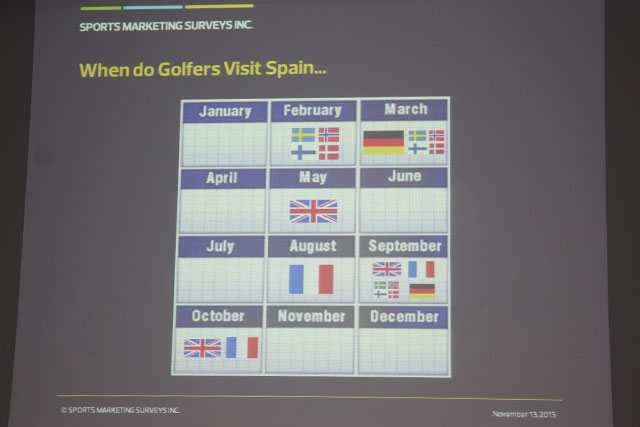
But when do golf travellers usually come to Spain from each market? Well, according to the study, golfers from Scandinavia (Sweden, Norway, Finland and Denmark) come in February, March and September; golfers from Germany visit in March and September; golfers from the UK come in May, September and October; and golfers from France travel in August, September and October.
Perhaps unsurprisingly the most favoured accommodation chosen by tourist golfers when booking their golf break in Spain was hotel accommodation, whilst the option of self catering villas was also quite popular, especially amongst the Scandinavian golfers.
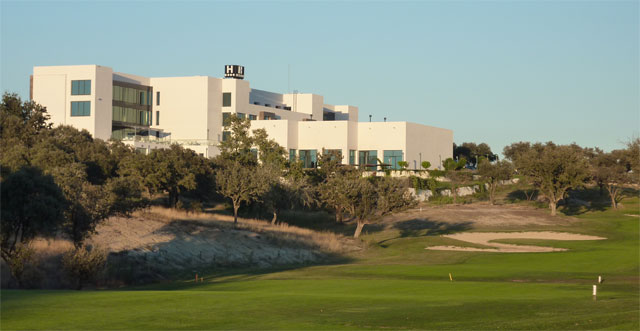
To tailor the right package it is essential to understand what golfers are looking for. Although you can set up your venue in such a way that it is perfect for your visiting golfers, it is important to realise that many golfers also look for variety in the courses they play, and thus it is important to partner with other venues in order to offer multiple course packages, especially if your venue only has 18 holes.
The appeal of Spain as a golf destination is clear and is heightened by the “non-golf” sites and activities on offer (beaches, culture, sightseeing, spas, other sports, etc.), which is very interesting not just for the golfers, but especially for the non-golfers who travel with them, such as partners, children or friends.
The average group size of golfers traveling to Spain was similar to the overall average rating in all markets, but possibly due to the additional non-golf on offer, the average length of stay for a golf break in Spain was almost a day longer on average for each nationality.
Regarding the average expenditure, whilst not the primary factor in determining where to travel for a golf break, the ‘price’ is amongst the top three considerations. The packages/deals offered for trips to Spain may well be one of the elements which helps Spain remain the leading European destination for golfers, and also explains why the ‘average expenditure per day’ is marginally lower than the average paid for overall golf holidays.
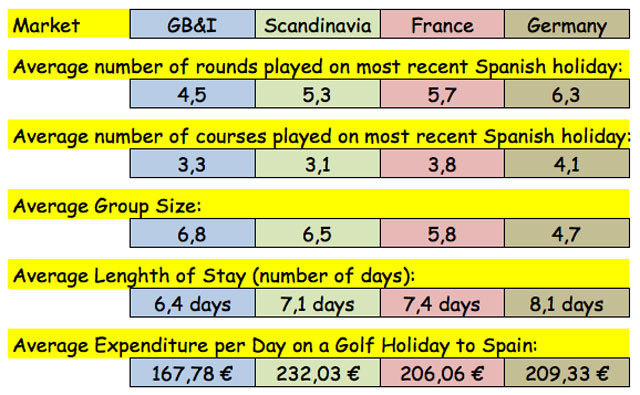
These results help to contextualize and explain the importance of golf tourism to Spain, both for regions and venues, but also from an overall economic standpoint.
Understanding who your golfers are and what your target market is looking for can help to ensure that the right packages are created and promoted adequately to bring golf tourism to your business.
By REDACCIÓN