

Golf Business
Daniel Carretero: “We must go towards the naturalization of golf courses”
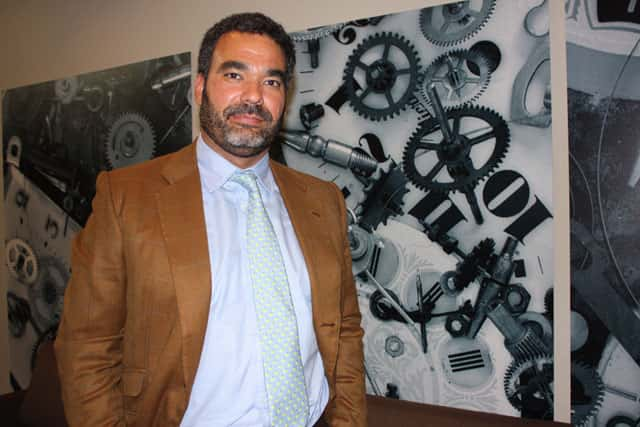
March 13, 2013 – Daniel Carretero‘s participation in the conference programme of the 1st Week of UCA Golf, provided a great opportunity for MyGolfWay.com to meet with this professional from the Canary Islands. On his curriculum figures the extraordinary milestone of being the first and only Spaniard to have been a greenkeeper at Augusta National Golf Club (U.S.), in which he was involved in the implementation and celebration of the U.S. Masters in 2011 and 2012.
Daniel Carretero has now returned to Spain to find out about the situation of our golf courses in these times of economic crisis, in order to advise on how to make them more sustainable, save money on maintenance and implement the naturalization trends of golf courses which are being implanted in the U.S.
Everyone will ask you, how did you become greenkeeper in Augusta? “Since the decision was made to have bentgrass greens in the 80s, Augusta has needed help to care for and maintain the golf course during the summers, requiring careful water management for this type of grass in an area as warm as Northern Georgia,” says Daniel Carretero. “At that time they asked professor Dr. Joseph M. Duich, from Penn State University, for advice for the implementation of this grass,. He said that yes, it was possible to build greens with this type of grass, but recommended that it be the Penn State staff who should look after it, and since then the tradition has persisted. The Augusta maintenance manager, my boss, was a graduate of Penn State, and that is how I, with my experience in Pinehurst No.2 and with good recommendations, started out in the selection process.”
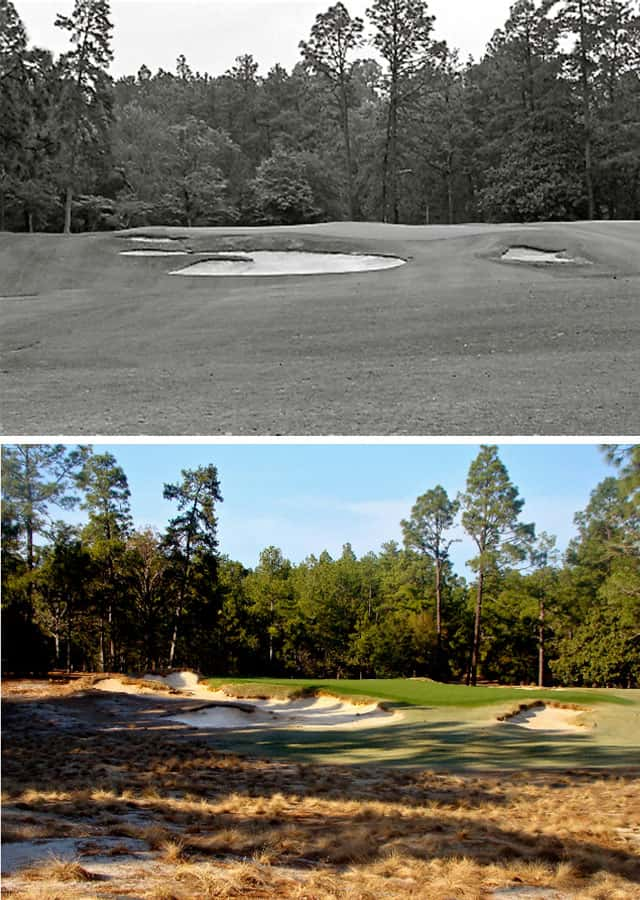
PINEHURST Nº2, 9 HOLE.
To address cost savings in management, the first thing this expert advises the managers of Spanish golf courses is to “hire a good and experienced greenkeeper manager, who knows about agronomy but above all who is a good communicator, and perhaps a user of the social networks, so that he can stay in touch with other experts and keep up-to-date with the trends of the sector.”
Then he proposed cost-saving strategies such as increasing the height of cut, lowering the frequency of cut, using the roller more often, narrowing the fairways, optimizing cutting directions, eliminating the intermediate rough and the collar around the greens, less variety in cutting heights, fewer bunkers, and, especially in Spain, a highly monitored water management, watering less often and to greater depth. In Pinehurst No.2, for example, overseeding is avoided and although the green colour fades, the grass is allowed to be dormant in the winter and dry in the summer.
“The naturalization of courses is spreading from the U.S. driven by the USGA and current economic needs,” says Daniel Carretero. “What the USGA is looking for, by defending this trend, is that golfers get accustomed to the naturalized golf course, because the way golf courses were conceived some years ago is just not sustainable today.”
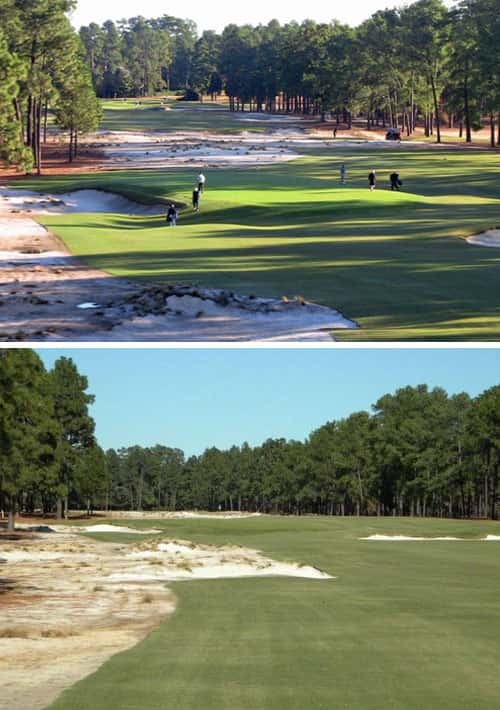
PINEHURST Nº2.
“I think golf courses will return to their roots, where much less is spent on maintenance,” adds Daniel Carretero. “Here in Europe we have the model of St. Andrews and the golf courses which host the Open Championship, which are played as they are, naturally.”
“This is the trend that is catching on in the U.S., adding more naturalized areas, that don’t have to be taken care of in order to have a visually pleasing aesthetic, which are attractive, but don’t need to be like the rest of the course. For example, there are now several American courses with irregular bunker edges, as if they were made by hand, more natural, less frequently edging is needed”.
At the end the golf course is the product that is sold, or the product that is prepared for a tournament. That is why the greenkeeper is so important. It is like a management department, which involves costs, but which it is essential to sell the product and make revenue. Meanwhile, the general manager maintains a more commercial role, which not only has to make sure costs are cut, but primarily has to generate income for profitability.
“The ideal is to ensure that there is no profit loss. The end result will be to improve the popularity and prestige of the golf course, as it will represent a major challenge for the serious golfer, pleasing for any kind of golfer, it will be more integrated in the environment, it will be more attractive and above all, more sustainable in these times of economic crisis we live in today,” he says.
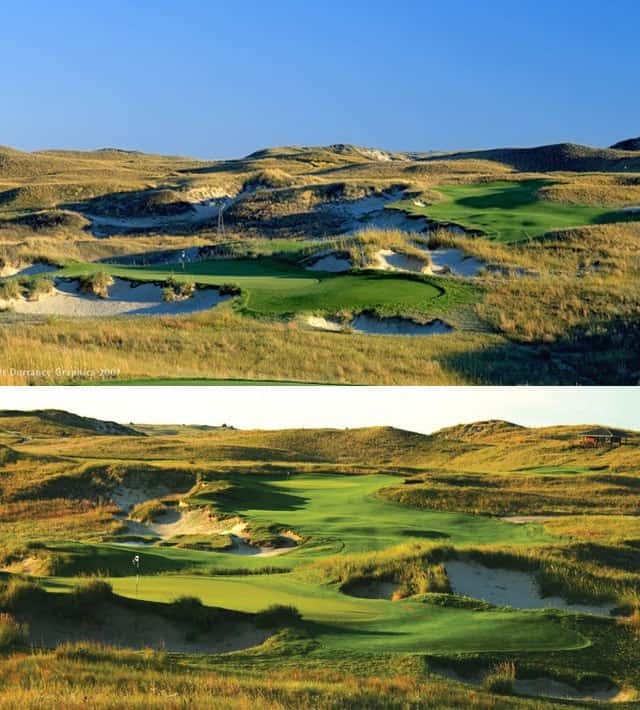
SAND HILLS.
While it is true that the average golfer wants to see green, and play from comfortable areas (usually at the end of the round, if complaints are made it is because someone has felt uncomfortable on the course), naturalization is also a necessity, and it should be done well, as it is a way of making the course better known, along with saving costs in maintenance and especially water.
“In Spain there are very good golf courses, but probably the naturalization that have been done here have not followed the appropriate criteria. I think the first golf course to be properly naturalized in Spain will have a competitive advantage, and may become as popular as courses like Valderrama, which is well-known for two main things: 1) for being very attractive lookwise, and 2) for being very demanding”, concludes Daniel Carretero.
By REDACCIÓNMore information at e-mail: danielcarretero@mac.com.
Tel. (+34) 928 353 623; mobil: (+34) 639 312 666; Twitter: @dcarrete.