


Amateurs
Golf handicap: what it is and how to calculate it
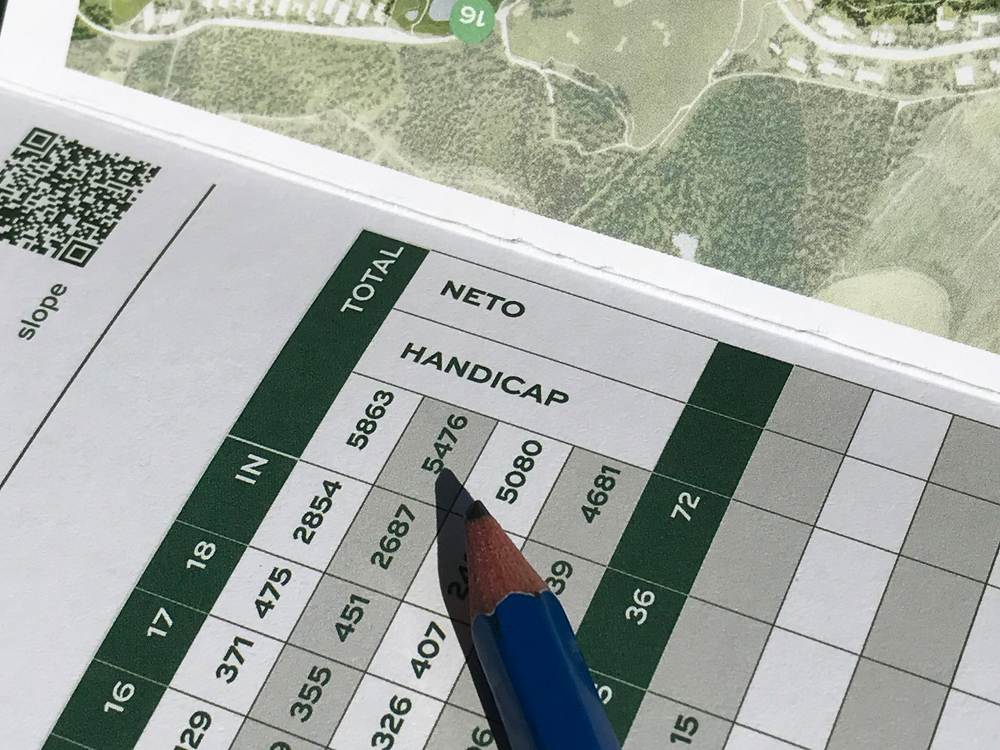
For amateur golfers, knowing your handicap, what it means and how it works is essential.
By Miguel Ángel Buil, MyGolfWay editor · Updated: November 2026
-
A golf handicap is a number that measures your playing ability and lets golfers of different levels compete on equal terms. Since 2020 it has been calculated worldwide under the World Handicap System (WHS): your Handicap Index is the average of your best 8 score differentials from your last 20 rounds. The maximum is 54.0. In Spain it is managed by the Royal Spanish Golf Federation (RFEG), and you need a federation license to hold one.
In this guide:
What is a golf handicap?
A handicap is the number of strokes a player receives according to their level. The lower it is, the better the player: a 0-handicap (scratch) golfer plays a course of standard difficulty in par, while a 20-handicap golfer needs, on average, about 20 more strokes.
Thanks to the handicap, a beginner and an experienced player can play the same competition and have the same chance of winning. It is one of the things that sets golf apart from other sports.
Since 2020 there has been a single system for the whole world, the World Handicap System (WHS), governed by The R&A and the USGA. In Spain it replaced the former EGA system in June 2020. This means a handicap obtained in Spain is directly comparable with one from Scotland or the United States.

Handicap Index, Course Handicap and Playing Handicap
One of the most common sources of confusion is that there are three different handicaps. Each has its own purpose:
| Concept | What it is | Where it is used |
|---|---|---|
| Handicap Index | Your playing ability, to one decimal place (for example, 18.2). It is the same on any course. | It is the figure shown on your federation record. |
| Course Handicap | The strokes you receive on a specific course and set of tees. It depends on how difficult the course is. | You check it in the club’s tables before you play. |
| Playing Handicap | Your Course Handicap adjusted for the format of play (individual, pairs, etc.). | It is the one applied on the competition scorecard. |
How to calculate your golf handicap
1. The score differential for each round
Every acceptable round produces a score differential, which measures how well you played taking the difficulty of the course into account:
Score differential = (113 / Slope Rating) × (Adjusted gross score − Course Rating − PCC)
- Course Rating: the score a scratch golfer would be expected to shoot on that course.
- Slope Rating: how difficult the course is for a non-scratch golfer, between 55 and 155. The reference value is 113.
- Adjusted gross score: your strokes, with each hole capped at a maximum of net double bogey (par of the hole + 2 + any handicap strokes you receive on that hole). That way, one disastrous hole does not ruin your handicap.
- PCC (Playing Conditions Calculation): an automatic correction if that day’s conditions (wind, rain, course set-up) made everyone play much worse or better than usual.
2. The average of the best 8 of the last 20
Your Handicap Index is the average of the best 8 score differentials from your last 20 rounds. It is updated every day a new score is posted, so it reflects your current level rather than how you played years ago.
3. Caps on increases and reductions
- Soft cap and hard cap: the system compares your Handicap Index with the lowest one you have had in the last 12 months. If it rises more than 3.0 strokes above it, any further increase is cut by half, and it can never go up by more than 5.0 strokes. This stops a bad run of form from sending your handicap through the roof.
- Exceptional score: if you post a round with a differential 7.0 strokes or more below your Handicap Index, it drops by an extra 1.0 stroke; if it is 10.0 or more, it drops by 2.0.
4. From Handicap Index to Course Handicap and Playing Handicap
Course Handicap = Handicap Index × (Slope Rating / 113) + (Course Rating − Par)
Playing Handicap = Course Handicap × handicap allowance for the format (for example, 95% in individual stroke play). The result is rounded to a whole number.
Golf handicap calculator
Work out your Course Handicap and Playing Handicap for any course, or the score differential for a round. You will find the Course Rating, Slope Rating and par on the club scorecard or the course website.

Step-by-step example
A player shoots 92 (already adjusted) on a par-72 course with a Course Rating of 71.4 and a Slope Rating of 128. There is no playing conditions adjustment that day (PCC = 0).
| Step | Calculation | Result |
|---|---|---|
| Score differential for the round | (113 / 128) × (92 − 71.4) | 18.2 |
| Handicap Index (if 18.2 is the average of their best 8) | — | 18.2 |
| Course Handicap | 18.2 × (128 / 113) + (71.4 − 72) | 20 |
| Playing Handicap (individual, 95%) | 20.02 × 0.95 | 19 |
In practice you do not need to do these sums yourself: your handicap authority calculates your Handicap Index automatically, and clubs publish Course Handicap tables for every set of tees.
How to get a handicap in Spain
- Learn the basics. Most clubs and golf schools offer beginner courses that cover the rules and on-course etiquette.
- Get your federation license. You apply through a club or your regional federation, and it is essential for an official handicap.
- Submit your first scores. Your first Handicap Index is calculated once you have posted scores adding up to 54 holes (for example, three 18-hole rounds, or a mix of 9- and 18-hole rounds). You start at a maximum of 54.0.
- Keep playing and posting rounds. Competitions count, and so do the general play rounds your club allows you to post. The more scores you have, the more reliable your handicap.
You can check your handicap and how it was calculated in the RFEG app or in the Player Area of its website. Specific requirements may vary by club and regional federation. Outside Spain, the process is very similar through your own national federation or golf association.
Handicap categories
In competitions in Spain, players are grouped into categories according to their handicap:
| Category | Handicap Index |
|---|---|
| 1st category | Up to 4.4 |
| 2nd category | 4.5 to 11.4 |
| 3rd category | 11.5 to 18.4 |
| 4th category | 18.5 to 26.4 |
| 5th category | 26.5 to 54.0 |
What is a good handicap? It depends on where you start. Getting below 36 is a great first goal for beginners; under 18 is considered a solid player, and under 10 a good player.
Changes to the system since 2024
The first revision of the World Handicap System came into force on 1 January 2024. The main changes for players are:
- 9-hole rounds and rounds of 10 to 17 holes: they count towards your handicap. The system fills in the holes not played with an expected score based on your level.
- Short courses and par-3 courses: they can now receive an official rating, so they also count for handicap purposes.
- Playing to your handicap: in Stableford, playing exactly to your handicap is always worth 36 points, on any course.
The R&A and the USGA have provisionally scheduled the next revision of the system for January 2028.

Golf handicap FAQs
What is the maximum handicap in golf?
Under the World Handicap System the maximum Handicap Index is 54.0, the same for men and women.
How often is a handicap updated?
It is recalculated every day a new acceptable score is posted.
Do I need a license to have a handicap?
Yes. In Spain, an official handicap is linked to an RFEG federation license. In other countries it is issued through your national federation or golf association, usually via a club.
What is the difference between Handicap Index and Course Handicap?
Your Handicap Index measures your ability and is the same on every course. Your Course Handicap is the number of strokes you receive on a specific course according to its difficulty (Course Rating and Slope Rating).
What is the slope in golf?
It is a value between 55 and 155 that shows how difficult a course is for a non-scratch golfer compared with a scratch golfer. The standard value is 113.
Do 9-hole rounds count towards your handicap?
Yes. Since 2024 the system converts 9-hole rounds into an 18-hole score differential using the expected score for your level.
Can my handicap go up a lot if I play badly?
Not all at once. Only the best 8 of your last 20 rounds count, and the soft and hard caps also slow down any increase of more than 3.0 strokes above your lowest Handicap Index of the past year.
By MIGUEL ANGEL BUILOfficial sources
Find out more in the Amateurs and Golf Lessons sections of MyGolfWay.